Friday, October 28, 2011
Website Evaluation
I learned what to look for on a website to verify its credibility. I also learned what the ".com .org" etc. means at the end of URL. The internet is full of information but not all of it is correct. This lesson helped me to figure out the best ways to find out what information is worth using or correct and what is not. I think it will help me in my future classes.

Friday, October 21, 2011
Oct. 21 Assignment

My graph shows that the Asians, Blacks, Females, and Hispanics got better in level two than the ones in the first series. The values then start to vary and there is no clear difference to prove one group did better than another. The Special Ed. students did much better than the other students in series 8.
Tuesday, October 11, 2011

Sunday, October 9, 2011
Journal Post #7
Quote: "Media literacy in the past tended to focus on alerting students to stereotypes, advertising, and propaganda and on protecting them from undesirable influences. Today's digital media literacy encompasses many additional topics, from using search engines, to creating Web sites and online profiles, to participating in social networking. One of the most basic strands of media literacy emphasizes the skills and knowledge students need to locate and critically assess online content."
Reaction: This quote says alot to me about how society works and is changing. When I read this quote I looked up some media literacy from years ago and then compared it to recent media literacy. I was able to notice a huge difference and it proved this quote to be correct. To think about what to use in media literacy to cause a person to think or feel a certain way is a complicated and complex process. To see that people are now able to make media literacy that actually forces people to think and sometimes even learn is quite impressive to me.
Sources: David, Jane L. "Educational Leadership:Literacy 2.0:Teaching Media Literacy." Membership, Policy, and Professional Development for Educators – ASCD. 2011. Web. 07 Oct.
cmlassignmentuon.blogspot.com/
Related Picture
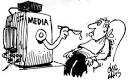
Reaction: This quote says alot to me about how society works and is changing. When I read this quote I looked up some media literacy from years ago and then compared it to recent media literacy. I was able to notice a huge difference and it proved this quote to be correct. To think about what to use in media literacy to cause a person to think or feel a certain way is a complicated and complex process. To see that people are now able to make media literacy that actually forces people to think and sometimes even learn is quite impressive to me.
Sources: David, Jane L. "Educational Leadership:Literacy 2.0:Teaching Media Literacy." Membership, Policy, and Professional Development for Educators – ASCD. 2011. Web. 07 Oct.
cmlassignmentuon.blogspot.com/
Related Picture

Friday, October 7, 2011

Sunday, October 2, 2011
Seven Power Lens Media Literacy
Quote: "For this particular speech, President Bush and his staff decided to position his podium in front of a painting of Teddy Roosevelt."
Reaction: This quote, and really this entire article, really taught me alot about how much work goes into one media image. The media wants the audience to preceive something a certain way and they set up the entire picture to help form that perception. Even the smallest little details of a picture that most people wouldn't even notice and/or understand are put into the picture for a reason. From now on when I look at media image I will try to notice every detail and ask myself why they chose this picture and set it up the way they did. This article taught me alot and I will look at media images differently now and try to pay more attention to the details.
Related Image:
Sources: http://www.masternewmedia.org/
Abilock, D. (2002 April 21) Seven Power Lenses.https://docs.google.com/viewer?a=v&pid=explorer&chrome=true&srcid=0B6DFAmexYq7vMTFmZjZhNWItZWY5Ni00NzdhLWIxYzItMmE4NmI0MGI5NzJl&hl=en
Reaction: This quote, and really this entire article, really taught me alot about how much work goes into one media image. The media wants the audience to preceive something a certain way and they set up the entire picture to help form that perception. Even the smallest little details of a picture that most people wouldn't even notice and/or understand are put into the picture for a reason. From now on when I look at media image I will try to notice every detail and ask myself why they chose this picture and set it up the way they did. This article taught me alot and I will look at media images differently now and try to pay more attention to the details.
Related Image:
Sources: http://www.masternewmedia.org/
Abilock, D. (2002 April 21) Seven Power Lenses.https://docs.google.com/viewer?a=v&pid=explorer&chrome=true&srcid=0B6DFAmexYq7vMTFmZjZhNWItZWY5Ni00NzdhLWIxYzItMmE4NmI0MGI5NzJl&hl=en
Subscribe to:
Posts (Atom)